Epoxy Floor Repair in Jacksonville — We Fix the Coastal Slab, Not Just the Coating
Lifting edges, blistering, a hazy chalk bloom, or hot-tire marks peeling up off the garage floor? On a Jacksonville slab that is usually river-and-ocean moisture working its way up through the concrete — not bad product. We read the slab first, then resurface and re-topcoat so the repair actually holds in Northeast Florida's salt air. Free on-site assessments across Duval County.
The Failures We Get Called Out for in Jacksonville
Most repair calls in this part of Northeast Florida start the same way: a coating that looked great for a season, then started letting go. The patterns we see again and again on Duval County slabs are blistering near garage doors and slab edges, a milky-white amine haze that wipes back but never clears, hot-tire pickup where a warm tire lifts the topcoat in a ring, and whole sheets peeling on floors that sat in standing water after a storm. Different symptoms, almost always one underlying story.
That story is water moving up through the concrete. Jacksonville sits on a low, sandy coastal plain wrapped around the St. Johns River, and the water table under a lot of homes here is shallow — close enough to the slab that vapor keeps pressing upward year-round. When a coating goes down over a slab that was never checked for that moisture drive, the vapor has nowhere to go but into the bond line, and it forces the epoxy off the concrete from below. No topcoat survives that if the cause underneath it is ignored.
The Atlantic adds a second front. Salt-laden air off the ocean and the marsh works into older garages and unconditioned shop bays, and salt is hard on a failing coating — it keeps edges damp, accelerates the chalky breakdown of a tired topcoat, and creeps under any spot that has already lost its grip. Riverside, Avondale, and the Beaches stock of older slabs poured before vapor barriers were standard tend to show all of this earliest.
Blake's crew handles this every week for Jacksonville homeowners and for the warehouse, distribution, and shop floors that keep a JAXPORT-and-logistics city running — the kind of high-traffic bays where a botched coating doesn't just look bad, it shuts down work. We don't re-coat over a problem and hope. We figure out why the last one failed, then resurface and re-topcoat so the next one stays put.
What a Jacksonville Repair Actually Includes
Every restoration here is built around one question first: where is the moisture coming from? Then we resurface and re-topcoat for a coastal slab that has to live with salt air and a high water table.
Slab read first
We Read the Slab Before We Quote
On a coastal Jacksonville slab the symptom rarely tells the whole story. We test for the moisture drive and check what the last coating was really bonded to — so we are fixing the cause, not the bubble on top of it.
Why coastal slabs lift epoxy →Vapor barrier
Mitigation for High-Water-Table Slabs
When the slab sits close to the water table or took on water in a storm, we install a vapor-barrier primer that holds the moisture back before a single coat of color goes down.
Down to gray
Full Resurface & Re-Topcoat
If the old system is too far gone, we diamond-grind it back to clean concrete, treat the moisture, and rebuild the floor with a topcoat chosen for salt air and Northeast Florida heat.
Targeted
Hot-Tire & Spot Fixes
Plenty of floors only need a section saved — a hot-tire ring at the garage door, a chipped edge, a cracked control joint. We blend in localized repairs without redoing the whole bay.
Coastal upkeep
Maintenance Built for Salt Air
Salt and humidity age a topcoat faster than dry-climate floors. We set a wash-down routine and a re-topcoat window so a Jacksonville floor — home garage or working shop — gets refreshed before it ever fails again.
Save it
Restore Beats Tear-Out
Saving a sound slab almost always costs less than ripping it out and starting over. We give Jacksonville owners a straight read on whether the floor is worth restoring — and tell you when it isn't.
See the cost guide →From Failed Floor to Fixed
Five steps, built around the coastal-moisture problem that sinks most Jacksonville coatings — the cosmetics come last, on purpose.
On-Site Walkthrough
~45 minBlake's crew comes out to your Jacksonville garage, shop, or warehouse, walks the failed coating with you, and maps where it lifted, blistered, or chalked. No cost, no obligation. Book your walkthrough free.
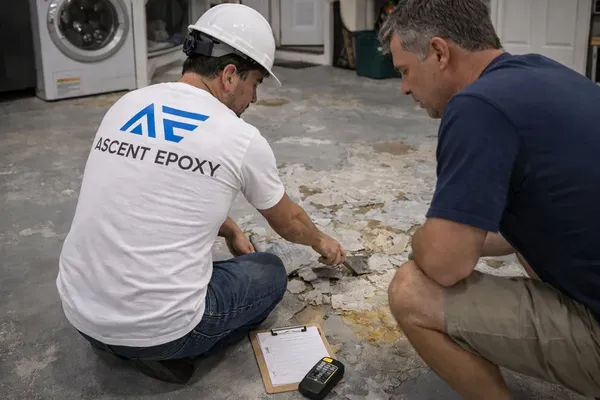
Moisture & Bond Testing
1–2 hrsBecause a coastal slab is guilty until proven dry, we run calcium-chloride and RH moisture testing, pull an adhesion check, and identify the old chemistry — so we know whether this is a vapor problem, a prep problem, or both.
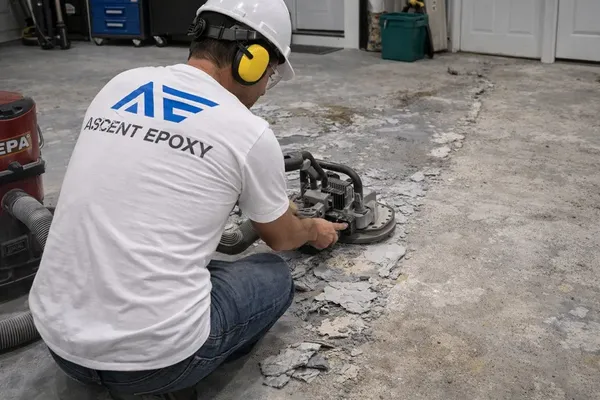
Grind & Seal the Slab
2–4 hrsWe diamond-grind the concrete to an open profile the new coat can lock into — scarifying lightly when the old layer can stay, going all the way to bare slab when it can't. On a high-water-table or storm-soaked floor, the vapor-barrier primer goes down here, first.
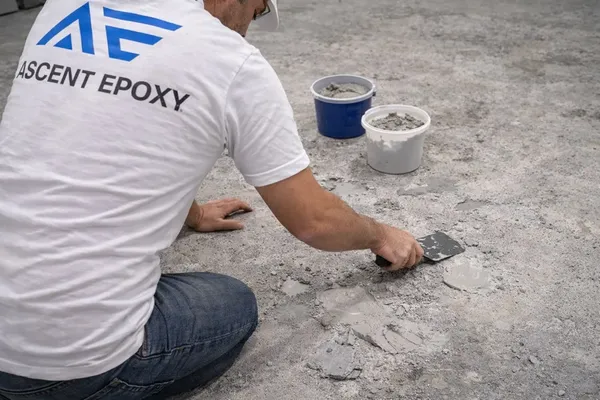
Patch & Re-Topcoat
3–5 hrsCracks get filled, control joints get rebuilt, and chipped areas get patched flush — then the topcoat goes back on, chosen for this slab's moisture read and for a coating that has to hold up to salt air and Jacksonville summer heat.
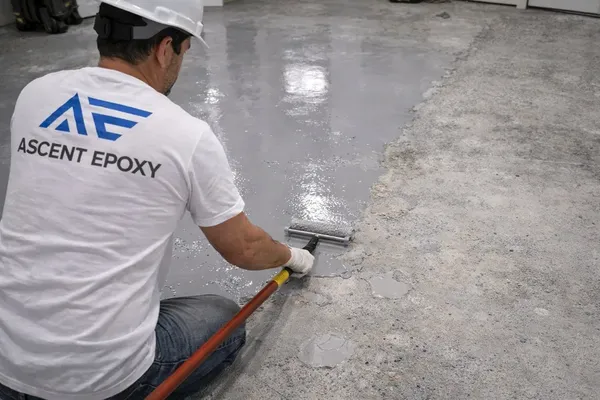
Cure & Written Warranty
24–72 hrsJacksonville heat and humidity move cure times around, so we schedule the dry window instead of fighting it — then hand you a written warranty in plain terms. No fine print that vanishes when you need it.
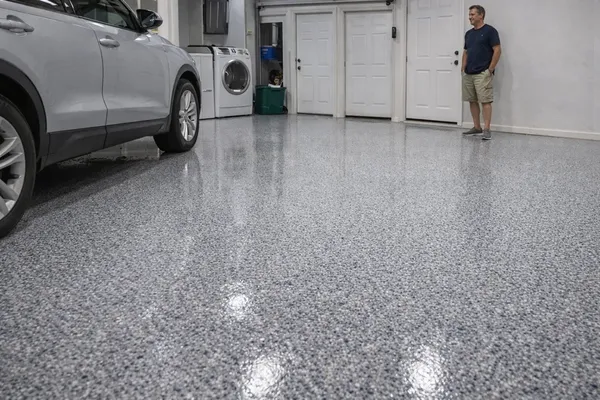
The Walkthrough Costs Nothing.
Have our crew look at your Jacksonville floor and tell you straight whether it should be saved or stripped.
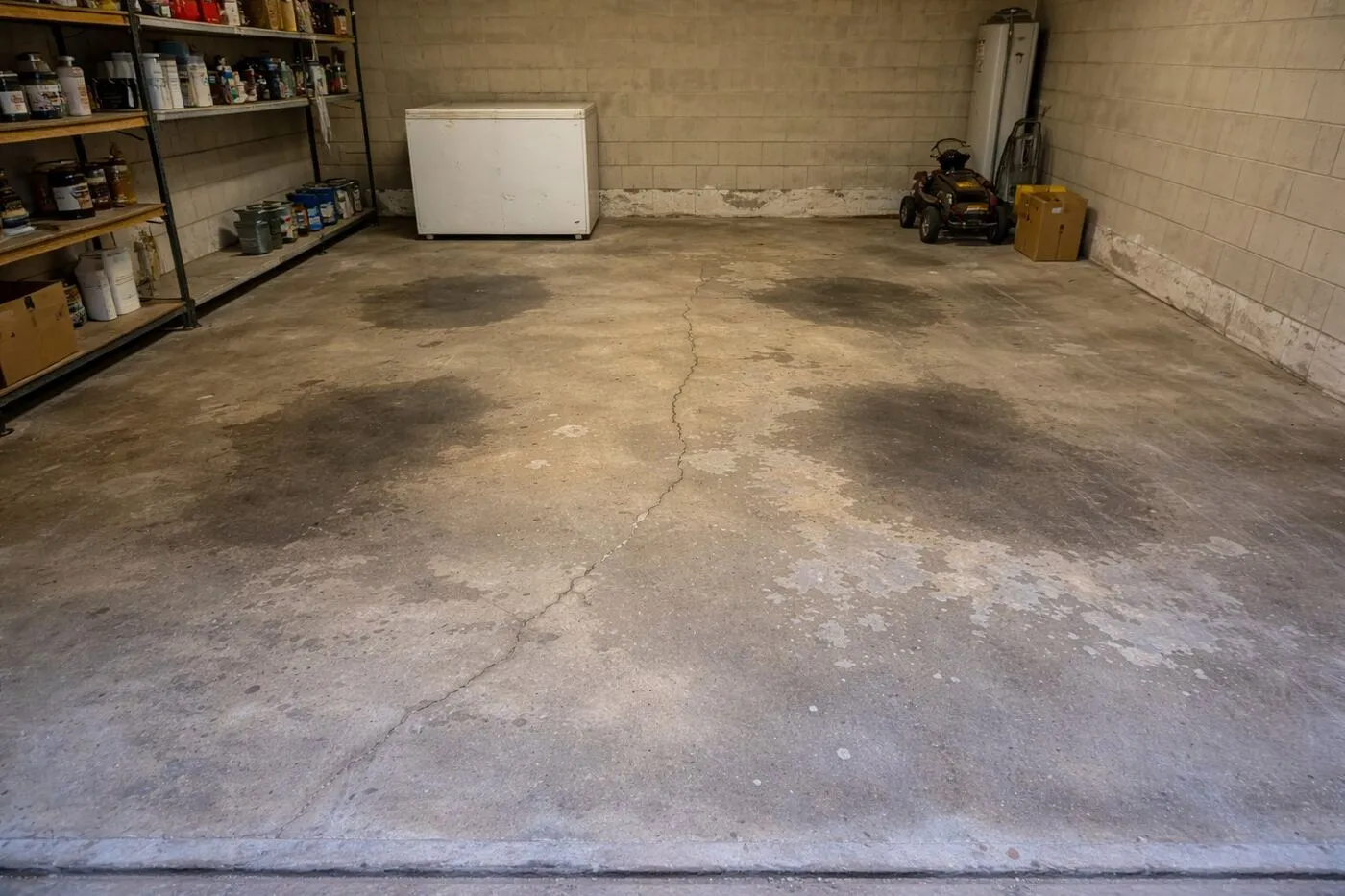
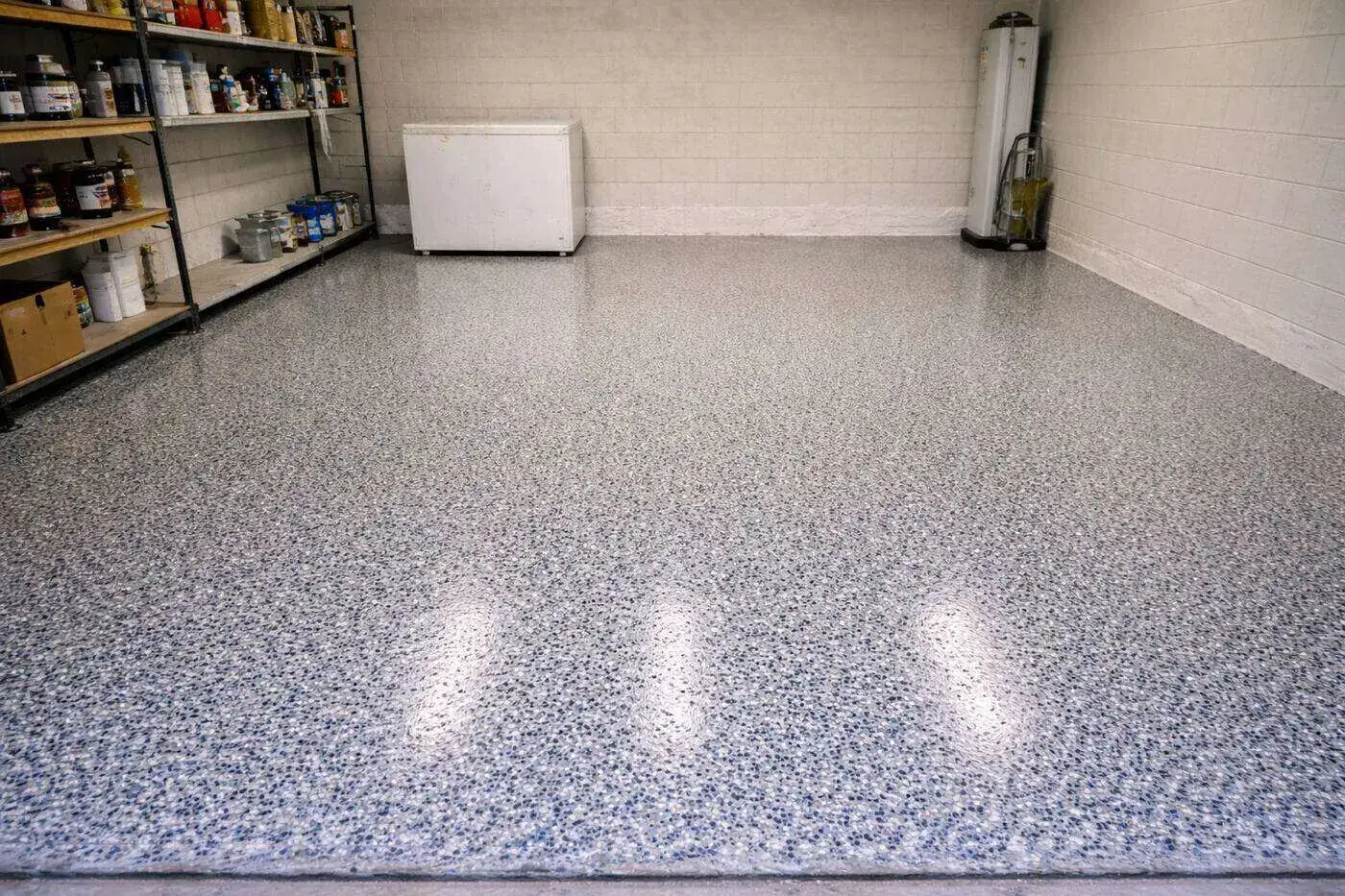
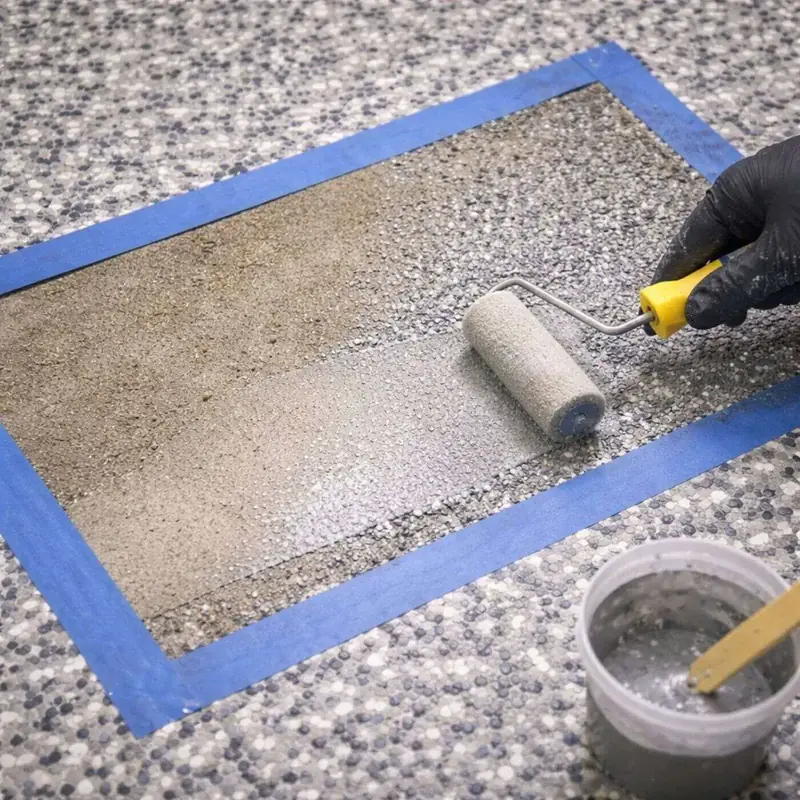
Restored Floors Around Jacksonville
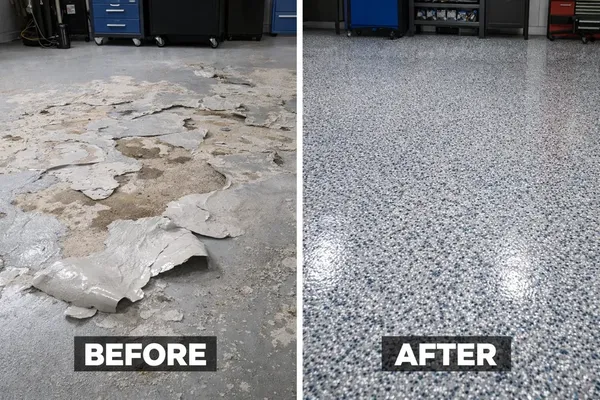
Before-and-after work from real resurface, re-topcoat, and spot-repair jobs across Duval County.
Rated 4.9★ — Duval County Reviews
What Jacksonville homeowners and shop owners say after the floor was put right — verified on Google.
"Had my garage floor done by Ascent Epoxy Jacksonville this summer. The crew showed up on time, worked clean, and the finish turned out perfect, smooth, glossy, and tough. No more dust or oil stains. Even with all the car traffic, it still looks new. Easily one of the best upgrades I have done to the house."
"Great experience from start to finish. They explained everything clearly and my shop floor looks amazing now. Definitely recommend."
"I chose Ascent Epoxy because of their great evaluations and experience. They did not disappoint us!"
Epoxy Repair FAQs — Duval County
Common questions about epoxy floor repair and maintenance in Duval County.
Northeast Florida's extreme humidity and moisture vapor transmission (MVT) through concrete slabs are the number one cause of epoxy failure in Duval County. When installers skip proper moisture testing or use coatings incompatible with high-moisture environments, the bond between epoxy and concrete weakens. Moisture trapped beneath the coating creates hydrostatic pressure that causes peeling, bubbling, and delamination.
Post-flood slabs and older homes without modern vapor barriers are especially vulnerable. Ascent Epoxy tests every slab for moisture before recommending a repair strategy.
It depends on the condition of the existing coating and the underlying concrete. In some cases, we can scarify the surface and apply a new system directly over the old one. However, if the previous coating is severely delaminated, contaminated, or applied over untreated moisture issues, a full strip-down to bare concrete is necessary for a lasting repair.
We perform on-site testing to determine the right approach for your specific floor — no guesswork.
Epoxy repair costs in Duval County vary depending on the scope of damage, square footage, whether a full strip is needed, and if moisture mitigation is required. Spot repairs start significantly lower than full re-coats. In many cases, repair is a fraction of the cost of a complete new installation.
We provide free on-site assessments, so you know exactly what to expect before any work begins.
Yes. Duval County slabs that took on water during a storm or hurricane often have chronic moisture issues that cause coatings to fail repeatedly. We specialize in post-flood slab preparation, including ASTM calcium-chloride and RH moisture testing, moisture-mitigation systems, and coatings specifically engineered for high-MVT environments.
Our process addresses the root cause so your new coating bonds permanently instead of peeling again within months.
Yes. We offer ongoing maintenance plans that include periodic inspections, cleaning guidance, minor touch-ups, and re-coating schedules tailored to your floor's traffic level and environment. Maintenance plans help extend the life of your epoxy floor by years and catch small issues before they become costly repairs.
Contact us for a customized maintenance plan for your home or business.