Polished Concrete in Jacksonville — A Finish That Lives With the Slab, Not On Top of It
Diamond-ground, densified, and machine-polished concrete for Jacksonville warehouses, retail floors, and showrooms. Because the shine is the slab itself, there is no coating to lift when First Coast humidity and a shallow water table push moisture up from below.
Why Polished Concrete Fits a Slab Sitting Close to the Water Table
Jacksonville sits low against the St. Johns River and the Atlantic, and a lot of the slabs we work on — warehouse pads off the port and Westside industrial corridor, retail floors out toward the Town Center, showroom bays near the Beaches — are poured over sand that holds groundwater only a few feet down. That hydrostatic pressure is constantly nudging moisture vapor up through the concrete. It is the single most common reason a coated floor lifts here, and it is exactly the condition where polished concrete shines.
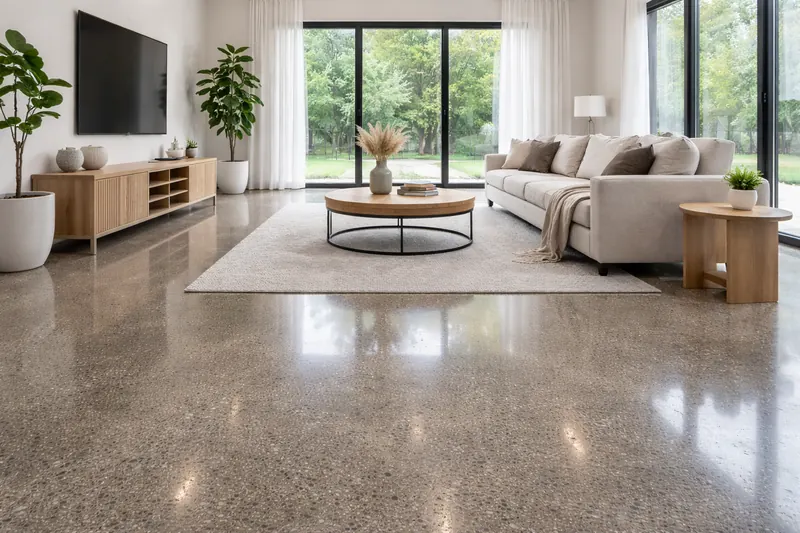
Polishing is not a coating at all. There is no polymer film to bond to a damp surface and peel later. We grind the slab open with diamond tooling, drive a lithium silicate densifier into the pores to harden it from within, then refine the surface through finer and finer grits until the concrete itself reads like glass. Vapor still passes straight through — there is nothing on top to trap it — so the high water table that wrecks a poorly installed coating has nowhere to do damage. The finish is the slab, and the slab stays breathable.
For Jacksonville's logistics, distribution, and military-adjacent operations, that durability matters as much as the look: forklift traffic, pallet jacks, and round-the-clock shifts don't wear a polished surface the way they peel coatings, and salt air carried in off the coast has no film to chalk or yellow. If a coated system is the better answer for your space, compare our industrial epoxy flooring and commercial epoxy flooring options, or see the Jacksonville flooring cost guide to weigh pricing by project type.
Get a Free Estimate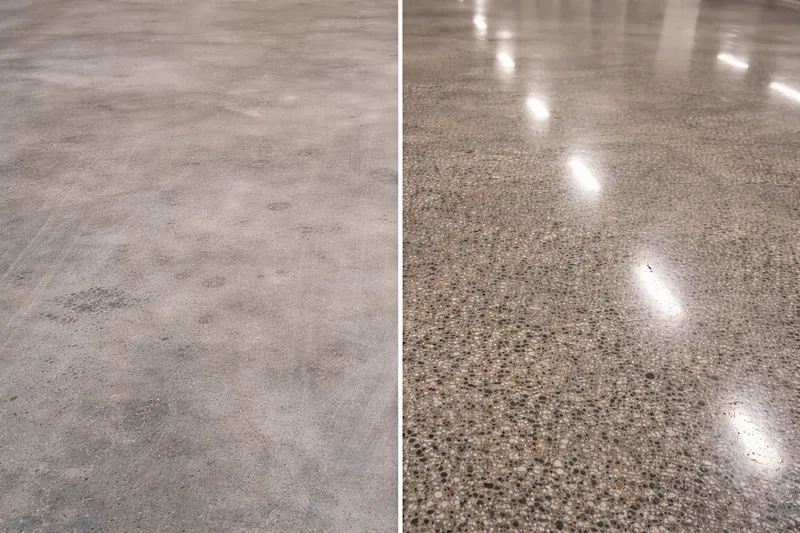
What a Polished Slab Earns You on the First Coast
Built for moisture, salt air, and the hard use of a port-and-logistics town.
Vapor-open
Lets the Slab Breathe
With groundwater sitting close to the surface across much of Jacksonville, vapor is always trying to escape upward. A polished slab has no film to trap it, so the moisture that delaminates coatings passes through harmlessly — the reason polishing is so well suited to floors poured near the river and the coast.
Salt-proof
Shrugs Off Coastal Salt Air
The salt-laden air rolling in off the Atlantic and up the St. Johns chalks, yellows, and breaks down topical coatings over time. There is nothing topical on a polished floor to attack — the surface is mineral-hardened concrete, so beachside showrooms and warehouses near the water hold their look far longer.
Heavy-duty
Built for Port-and-Warehouse Traffic
Distribution floors near JAXPORT and the Westside logistics parks take forklifts, pallet jacks, and steel-wheeled carts all day. A polished slab is the concrete itself, so that traffic burnishes it rather than tearing up a coating — no chips, no peel-back at the wheel paths, no annual recoat downtime.
30%+
Brighter Without Adding Lights
A polished surface bounces ambient light back up, lifting visible brightness by roughly a third. In a high-bay Jacksonville warehouse or a Town Center–area showroom that translates to fewer fixtures running and a cleaner, more open feel under the same lighting plan.
Dust-mop
Almost Nothing to Maintain
Care comes down to a dust mop and the occasional damp mop — no waxing, no stripping, no recoat cycle. For First Coast operations that can't surrender a bay to floor maintenance, that means the floor keeps working while everything else does too.
20+ yrs
Two Decades From One Install
The densifier reacts inside the concrete to lock the pores shut, so the slab stops shedding dust and the polish becomes part of the floor — not a layer waiting to wear off. Done right, a Jacksonville polished floor holds for twenty years or more, which is hard to match on a per-year basis.
From Raw Slab to Mirror — Step by Step
Polishing is mechanical, not chemical-on-top, so the work happens in the slab. Here is how we take a Jacksonville floor from dull and porous to high-gloss — with the densifier and moisture checks the First Coast's water table makes non-negotiable.
Read the Slab
~45 minWe test the slab's hardness, check for moisture coming up from below, and map every crack, spall, and old patch. On the older industrial floors common around Jacksonville's port and Westside, this is where we confirm what the concrete can take and fill the joints before any tooling touches it. Schedule a free assessment.
Open It With Diamonds
4–8 hrsCoarse diamond tooling cuts off failed coatings, glue, and surface blemishes and flattens the slab. If you're converting a floor where an old coating already lifted from First Coast moisture, this is the pass that strips it back to sound concrete and sets up an even polish.
Harden From Within
1–2 hrsWe flood the surface with a lithium silicate densifier that soaks into the open pores and reacts with the concrete, hardening it densely and locking out dust. This is what lets the slab take a deep polish while staying vapor-open — the key to surviving a high-water-table floor without a film on top.
Refine to the Sheen You Want
6–10 hrsWe step the floor up through progressive grits — 400, 800, 1500, and 3000 — stopping at the level you're after, from a soft satin for a showroom to a full mirror for a retail floor. Each pass tightens the surface and builds the reflectivity that makes polished concrete read like glass.
Seal Against Spills
1–2 hrsFinally we work in a thin, penetrating guard treatment for stain resistance. It shrugs off oil, forklift drips, and everyday spills and makes wiping up easier — without sitting on the surface as a film, so the floor keeps both its breathability and its finish.
Wondering What Your Slab Can Become?
Blake's crew will read your Jacksonville floor, check it for moisture, and tell you straight what level of polish it can hold — at no charge.
Polished Floors Around the First Coast
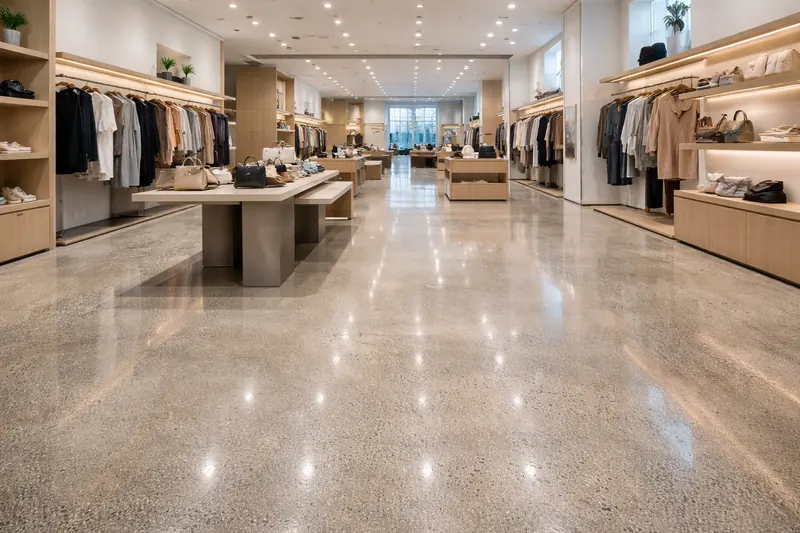
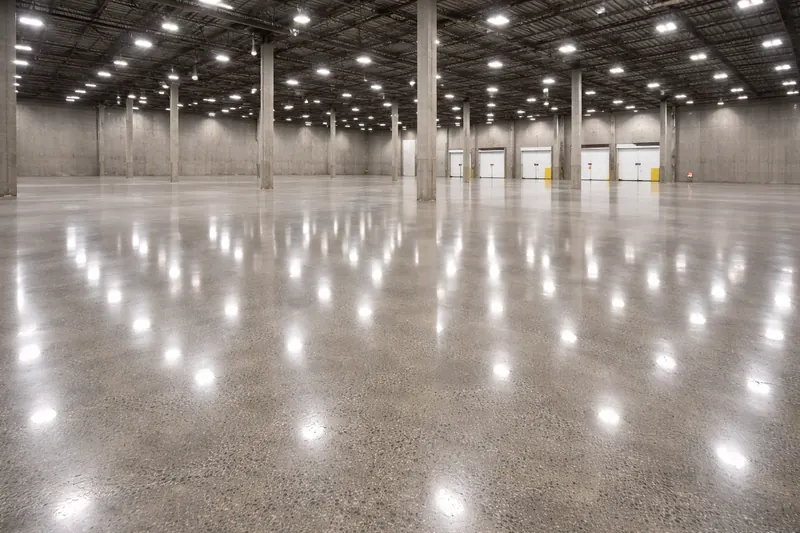
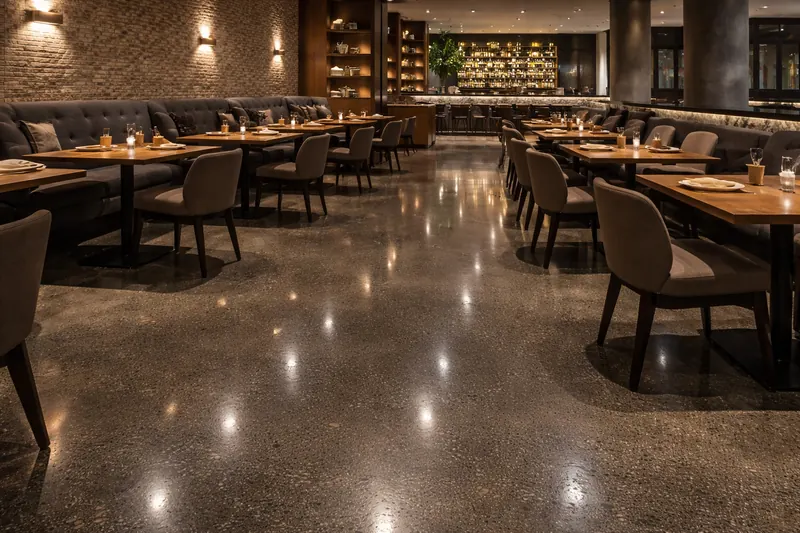
A look at polished concrete work across Jacksonville and the surrounding Northeast Florida market.
Rated 4.9★ — Duval County Reviews
Real reviews from real Duval County customers — verified on Google.
"Had my garage floor done by Ascent Epoxy Jacksonville this summer. The crew showed up on time, worked clean, and the finish turned out perfect, smooth, glossy, and tough. No more dust or oil stains. Even with all the car traffic, it still looks new. Easily one of the best upgrades I have done to the house."
"Great experience from start to finish. They explained everything clearly and my shop floor looks amazing now. Definitely recommend."
"I chose Ascent Epoxy because of their great evaluations and experience. They did not disappoint us!"
Polished Concrete Questions — Jacksonville
What First Coast businesses and property owners ask before committing to a polished floor.
Polished concrete mechanically refines the existing slab to a high-gloss finish using progressively finer diamond tooling. Epoxy applies a polymer coating on top of the concrete. Because polished concrete has no coating layer, it cannot peel or delaminate the way epoxy can. Both are excellent flooring systems, but they serve different needs — polished concrete is ideal for large commercial spaces that want a natural, low-maintenance look.
Polished concrete in Duval County typically costs between $3 and $8 per square foot, depending on the level of polish and the condition of the existing slab. This is generally less expensive than a full epoxy coating system. Factors like crack repairs, densifier selection, and the desired sheen level affect your final price. Contact us at (904) 441-5056 for a free, no-obligation estimate.
Most existing concrete slabs can be polished, including older slabs commonly found in Duval County commercial buildings and warehouses. Cracks, spalls, and surface damage are repaired during the initial grinding phase before polishing begins. Our team evaluates your slab during the free consultation to confirm it is a good candidate for polishing. Call (904) 441-5056 to schedule yours.
Polished concrete lasts 20 years or more with basic maintenance. Unlike coatings that can wear, chip, or peel over time, the polished finish is part of the concrete itself. Routine dust mopping and occasional damp mopping are all that is needed to keep the floor looking like new for decades.
Polished concrete has slip resistance comparable to other common hard flooring materials like tile and terrazzo. It is not inherently more slippery than unpolished concrete when dry. For wet areas such as restaurant entryways or restrooms, anti-slip treatments and topical guards can be applied to increase traction without affecting the floor's appearance.