Residential Epoxy Flooring in Duval County — Coatings That Beat the Water Table
In Northeast Florida, the floor that fails is almost never the floor that was painted on a dry day — it's the one poured on a slab with the St. Johns River's water table sitting a few feet below it. We install seamless, moisture-tested epoxy for Jacksonville homes from Riverside and San Marco out to Ponte Vedra and the Beaches: finishes built to take year-round humidity, Atlantic salt air, and the rising-vapor problem that lifts ordinary coatings off Duval County concrete.
Why a Jacksonville Slab Peels — and How We Stop It
If you have ever seen an epoxy floor bubble, haze white, or peel up in sheets within a year or two, there is a good chance it went down in Northeast Florida. The reason is almost always the same here, and it is not the product — it is what sits under the concrete. Across Jacksonville the water table is shallow and the ground stays damp, so moisture vapor drives up through a slab-on-grade foundation around the clock. A coating that was never primed against that vapor has nowhere to anchor, and the pressure breaks the bond from below. Get the prep right and the same floor stays put for two decades.
That is the difference between a floor "installed in Jacksonville" and a floor built for Jacksonville. Before any product is mixed, we read your slab the way it actually behaves in this climate: where the home sits relative to the river plain, whether the concrete shows the chalky efflorescence of a wet slab, and what an ASTM calcium-chloride or in-situ humidity reading tells us. Older neighborhoods near the river — Riverside, Avondale, the bungalows of Springfield — and the low-lying lots out in Arlington and Mandarin tend to read high, and high readings get a vapor-barrier primer first. Blake has coated enough Duval County concrete to know that the meter usually just confirms what the slab is already telling you.
There is a second enemy most flooring companies ignore: the air off the Atlantic. Out toward Jacksonville Beach, Atlantic Beach, and Ponte Vedra, salt-laden air and constant humidity are punishing on anything that wasn't formulated to resist them. We seal every home under a UV-stable polyaspartic topcoat so the coastal sun pouring through a Florida room or lanai won't amber it yellow, and so salt residue wipes off instead of etching in. For the space that takes the worst abuse — the attached garage — see our garage epoxy page, and for real local numbers, our Duval County epoxy cost guide.
Get a Free Quote
Your Floor's Future Is Decided by Where You Live in Duval
Jacksonville is not one slab. The river plain, the older urban core, the suburbs, and the Beaches each ask something different of a coating — here is how we approach each.
Riverside, Avondale & San Marco — the historic core
The bungalows and 1920s homes near the St. Johns sit low and old, and many have slabs or additions poured straight onto damp river-plain soil. These are the floors that peel fastest when prep is skipped. We test hard, prime against vapor, and patch the spalling that decades of moisture leave behind before a single decorative coat goes down.
Mandarin, Arlington & the Southside — low, wooded, and damp
Shaded lots with poor drainage and a water table close to the surface keep slabs wet far longer than a sunny inland yard would. A flake-and-polyaspartic system here hides tracked-in dirt, shrugs off the damp, and — over a properly primed slab — won't lift the way a builder-grade coating does after the first wet season.
Jacksonville Beach, Atlantic Beach & Ponte Vedra — salt-air country
Sand, salt, and relentless coastal sun define the Beaches. Garages and lanais here see wet bare feet, gritty sand, and direct UV that yellows cheap resin. We finish them with a slip-textured, UV-stable topcoat that holds its color and rinses clean of salt instead of letting it etch the surface.
Nocatee, Fleming Island & the newer suburbs
Newer slabs are flatter and cleaner, but Florida humidity is still humidity — we still moisture-test, because a fresh slab can read just as high as an old one. These homes are where a designer metallic or a clean solid color in the kitchen, sunroom, or three-car garage pays off most on resale.
What a Jacksonville Epoxy Floor Actually Buys You
Six reasons Duval County homeowners pick epoxy over tile, laminate, and bare concrete in this climate.
Zero
No Grout Lines for Mildew
In a humid Jacksonville home, tile grout is where the mildew wins — the lines hold moisture you can never fully scrub out. Epoxy goes down as one seamless, monolithic sheet, so there is nowhere for damp or spores to settle in the first place.
40+
Finishes for Coastal Light
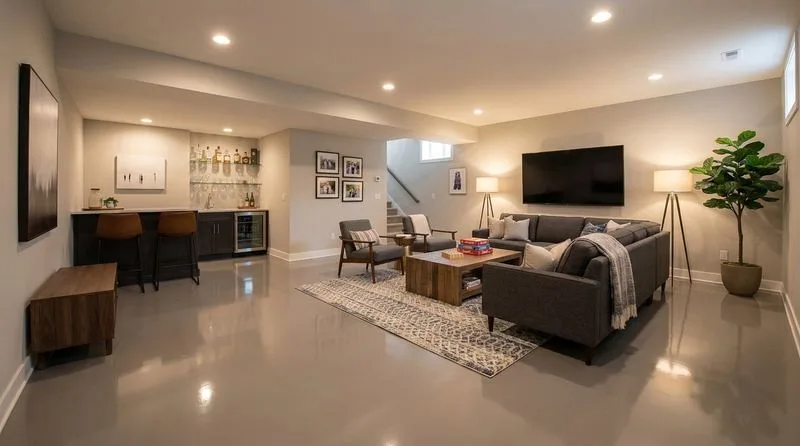
Metallic swirls, flake blends, quartz, or solid color — chosen with Jacksonville's strong coastal daylight in mind. Lighter, reflective finishes keep sun-filled Florida rooms and lanais cooler, and a flake blend hides the fine sand tracked in off every Beaches driveway.
Slip-Rated
Sure Footing, Wet or Dry
On a lanai or pool deck near the Beaches, a fine broadcast aggregate gives the topcoat real grip for wet bare feet and the sudden afternoon downpour. Indoors the same floor stays smooth, claw-proof for pets, and safe for kids in socks.
5 min
Cleanup in Sandy NE Florida
Beach sand, rainwater off the lanai, pollen in spring, and tracked-in yard dirt — none of it stains a sealed epoxy floor. No waxing, no resealing, no special products. A dust mop and the occasional damp pass is the entire routine.
+$5K
Shows Well at Resale
In Jacksonville's competitive resale market, a finished garage, Florida room, or sunroom floor reads as a maintained, move-in-ready home. Buyers touring on a humid afternoon notice glossy seamless epoxy over the stained concrete and mildewed grout they see everywhere else.
See full pricing guide →20+ yrs
Beats the Water Table for Decades
Laminate swells, carpet traps the damp, and tile pops loose when a slab takes on moisture from below. Installed over a moisture-tested, vapor-controlled Duval County slab, epoxy holds for 20+ years without peeling or hazing — and a non-porous floor dries out fast if water ever gets in.
How humidity affects durability →Our Jacksonville Install — Read the Slab First
Five steps built around the one thing that sinks most Northeast Florida floors: the moisture pushing up through the slab. We confirm what your concrete is doing before we commit to a system — never the other way around.
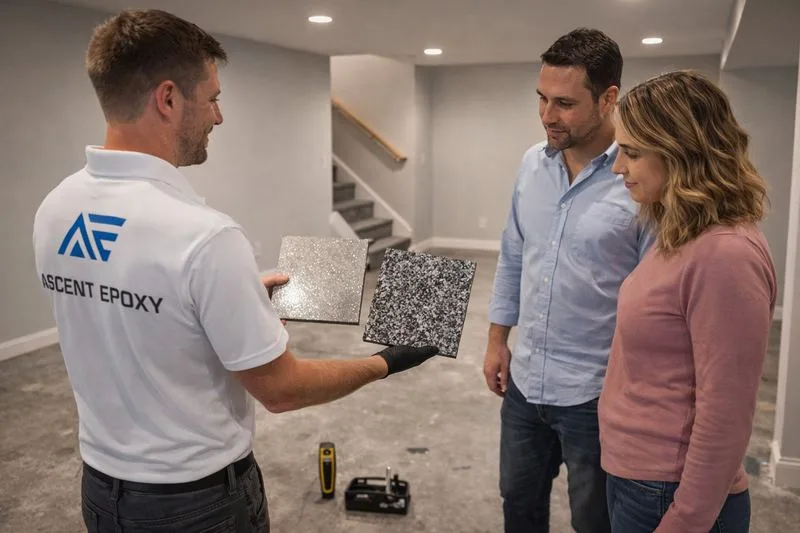
Free Consultation
~45 minBlake or a crew lead comes to your home, looks at how the slab sits relative to grade, checks for the chalky efflorescence and dark patches that betray a wet Duval County slab, talks through finishes, and leaves a written quote with no hidden fees. Schedule yours free.
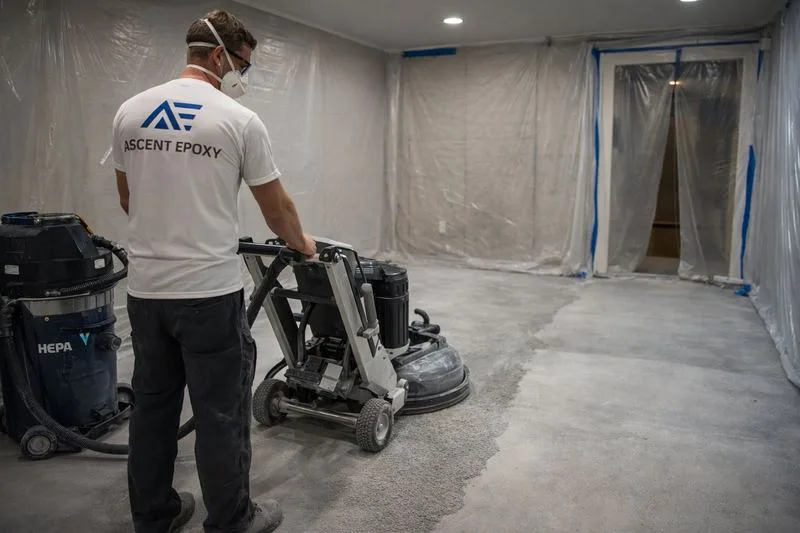
Grind & Moisture Test
2–4 hrsDiamond grinding opens the concrete to a clean profile so the coating bonds permanently. Then the step that matters most on a Duval County lot: an ASTM moisture test on every slab. That reading decides whether we can coat directly or need a vapor barrier first — we never guess at it.
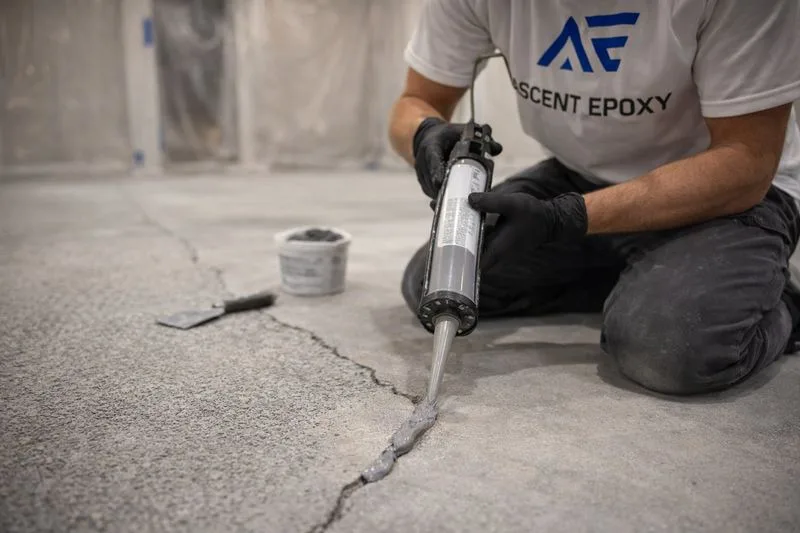
Repair & Vapor Barrier
30–90 minCracks, spalls, and divots get filled flush with structural-grade epoxy filler. If the moisture reading came back high — common on a low-lying or river-adjacent Jacksonville slab — we bond a vapor-barrier primer here so the rising moisture can never lift the coating later. This is the single step most failed Northeast Florida floors skipped.
Coat to the Dew Point
3–5 hrsWe apply primer, decorative body coat, and a UV-stable polyaspartic topcoat — but only when the air cooperates. A coating mixed by feel instead of against the day's humidity and dew point is what hazes or bubbles within a season here, so each layer is timed to the conditions in your home that day.
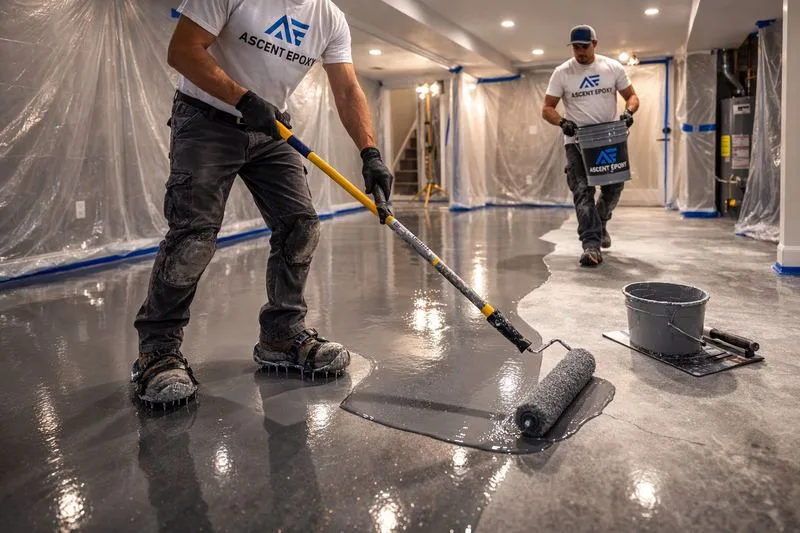
Cure & Enjoy
24–72 hrsYour new floor cures for 24-72 hours depending on the humidity that week. We hand you simple care instructions and a written warranty — so you know exactly what is covered and why a slab we primed against vapor will outlast the coastal weather.
Ready to Start? The Slab Read Is Free.
Book a no-obligation consultation, see finish samples in your own Jacksonville light, and find out what your concrete is actually doing.
Recent Jacksonville Floors
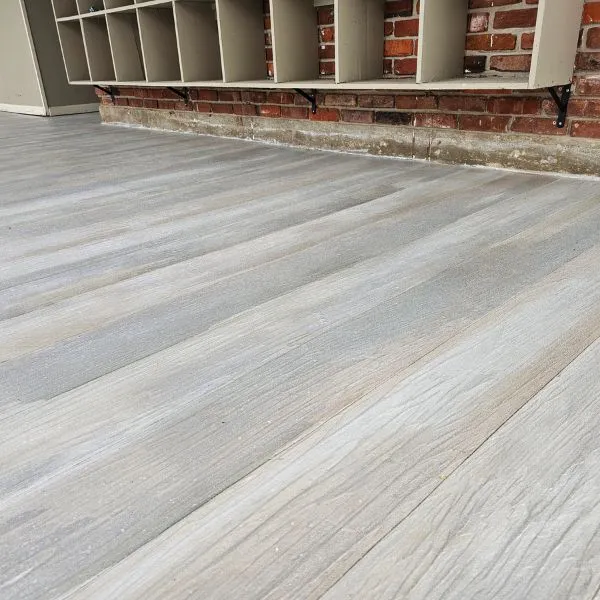
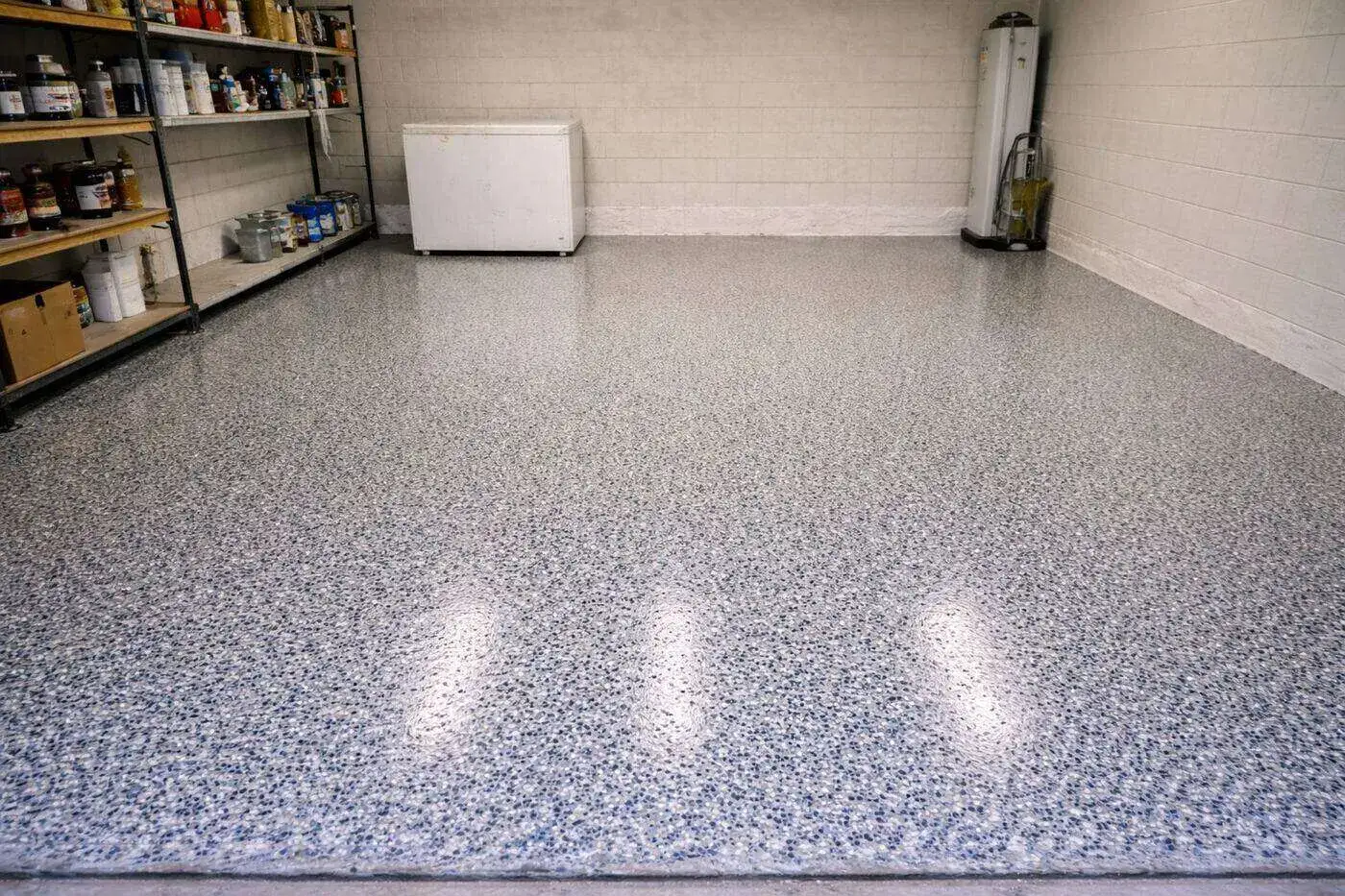
Real residential installations from Duval County homes — from riverside historics to Beaches garages, not stock photos.
Rated 4.9★ — Duval County Reviews
Real reviews from real Duval County homeowners — verified on Google.
"Had my garage floor done by Ascent Epoxy Jacksonville this summer. The crew showed up on time, worked clean, and the finish turned out perfect, smooth, glossy, and tough. No more dust or oil stains. Even with all the car traffic, it still looks new. Easily one of the best upgrades I have done to the house."
"Great experience from start to finish. They explained everything clearly and my shop floor looks amazing now. Definitely recommend."
"I chose Ascent Epoxy because of their great evaluations and experience. They did not disappoint us!"
Residential Epoxy FAQs — Duval County
Common questions from Duval County homeowners about residential epoxy flooring.
Residential epoxy flooring in Duval County typically costs between $6 and $12 per square foot installed, depending on the finish and condition of your slab. Metallic epoxy finishes run higher than solid-color systems. Factors like crack repairs, moisture mitigation, and room size also affect your final price. Contact us at (904) 441-5056 for a free, no-obligation quote tailored to your home.
Epoxy flooring is an excellent choice for Duval County kitchens. It creates a seamless, waterproof surface that resists stains from cooking oils, wine, and food spills. Unlike tile, there are no grout lines where mold can grow in Northeast Florida's humid environment. Epoxy is also easy to clean and available in decorative finishes that complement any kitchen design.
In most cases, existing flooring materials like tile or vinyl must be removed before epoxy application to ensure proper adhesion. We grind the concrete substrate and perform moisture testing, which is critical in Florida where slab-on-grade foundations are common. Our team evaluates your existing floor during the free consultation and recommends the best preparation approach. Call (904) 441-5056 to schedule yours.
A professionally installed residential epoxy floor typically lasts 20 years or more with proper care. Longevity depends on the quality of surface preparation, the coating system used, and how the floor is maintained. In Duval County, our climate-tested installation process accounts for humidity and slab moisture to prevent premature peeling or delamination.
Epoxy can be successfully applied to previously flooded slabs, but thorough evaluation is essential. We perform calcium chloride moisture testing and inspect for damage from the 2016 floods or subsequent weather events. If moisture levels are elevated, we apply a moisture mitigation system before coating. Many Duval County homes that flooded have been successfully resurfaced with epoxy. Call (904) 441-5056 for a free slab assessment.