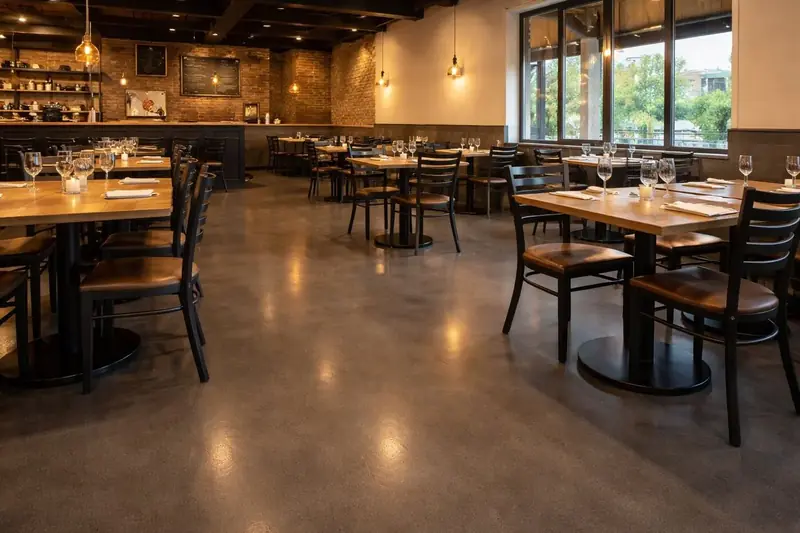
For a Duval County business, the floor is a piece of equipment, not decoration. A commercial epoxy or polyaspartic system turns a bare slab into one seamless, sanitary, slip-rated surface that survives forklift traffic, grease, salt, and daily wash-downs. What it shouldn't be is bought off a flat price sheet: the right build is set by your industry, and on a Northeast Florida slab it's set just as hard by what the concrete is doing underneath.
Jacksonville runs on logistics and the water. Containers move through JAXPORT, freight rolls out of the Westside and Imeson distribution corridor, restaurants pack the Beaches and San Marco, and service bays line Philips Highway and Blanding. Each of those floors answers to a different boss — a forklift, a health inspector, a customer at the door, a mechanic's solvent rag — and a coating that's perfect for one of them will peel, crack, or fail an inspection in another. So instead of one generic "commercial epoxy" recommendation, this guide sorts the systems by the trade that has to live on them, then gets into the two local realities that decide whether any of it lasts, what actually moves the price, and how the work gets done without shutting your doors.
Commercial and industrial floors are a core part of what we install at Ascent Epoxy Jacksonville — from retail, restaurant, and hospitality floors to heavy-duty warehouse and distribution systems built for port-side freight. Want to skip the reading and talk through your actual space? Call (904) 441-5056 and Blake's crew will set up a free on-site walkthrough.
Why Duval County Businesses Choose Epoxy
Owners here don't coat a slab to make it pretty. They do it because bare or tiled concrete keeps costing them — in cleaning hours, in failed inspections, in repairs, in the impression a scuffed floor leaves on a customer. A poured system answers all of those at once, which is why it's become the default for Jacksonville facilities that treat the floor as part of the operation. Here's the practical math behind it:
- One continuous surface. No grout, no tile seams, no control-joint gaps for grease, freight grit, or bacteria to pack into. A mop or auto-scrubber clears it in one pass, and with a coved base running up the wall there's literally no corner for an inspector to write up — the reason it dominates Beaches kitchens and Southside clinics.
- It eats what your trade throws at it. Hydraulic oil, brake cleaner, citrus degreasers, food acids, battery acid — the right resin shrugs off the chemistry that etches and stains raw concrete, while the wear layer takes forklift point-loads and pallet-jack abrasion that would dust an uncoated port-side slab.
- Traction you specify, not hope for. Broadcast quartz or an anti-slip additive lets the topcoat be dialed to the room: aggressive on a cook line or wash bay where water and grease are constant, smoother in a retail aisle where easy mopping wins. You set the number, you carry the liability down.
- Brighter box, lower lighting load. A high-build gloss bounces overhead light back up, which matters in a tall Westside distribution bay or a windowless back-of-house — better visibility for the same fixtures, and often fewer of them.
- Recoat, don't rip out. When the topcoat finally wears thin, it gets re-applied over the existing build instead of demolished. Stacked against the repeat repair-and-replace cost of VCT, quarry tile, or sealed concrete, a properly installed coated floor is usually the cheapest surface a building owns over its full life.
Commercial Epoxy by Industry
Don't start with the coating — start with the punishment. Match the build to the work the floor actually does day in and day out, and the spec mostly writes itself. Here is how that plays out across the trades that fill Jacksonville's commercial corridors.
Warehouses & Port Logistics
This is Jacksonville's bread and butter, and its hardest floor. Slabs in the Westside, Imeson, and Cecil Commerce Center distribution parks take relentless point-loading from sit-down forklifts and loaded reach trucks, dragged pallets, and freight dropped off a dock plate. The job list is abrasion and impact resistance, OSHA traffic-lane and safety striping, and dust control so the slab stops shedding powder onto inventory and into shrink-wrap. A high-build flake or solid-color epoxy under a tough polyaspartic topcoat carries most distribution floors; battery-charging rooms and heavy-rack aisles step up to a mortar-grade build. On a port-side warehouse with the dock doors open to salt air, the perimeter and dock pits get the more chemically resistant spec first.
Restaurants & Commercial Kitchens
From the seafood houses along the Beaches to the line-busy kitchens of San Marco, Riverside, and the St. Johns Town Center, this is the most abusive floor in any building. It takes thermal shock from boiling stock, fryer oil, and pressure-steam cleaning; standing grease and food acids that liquefy a weak coating; and a non-negotiable Duval County Health Department demand for a slip-rated, sanitary surface. Urethane cement is the workhorse here because it laughs off the heat and chemistry that crack ordinary epoxy, with a quartz broadcast for the traction a wet line needs. The coved integral base — floor curving seamlessly up the wall — kills the floor-to-wall joint inspectors zero in on first.
Retail & Showrooms
In a Town Center boutique or a Riverside storefront, the floor is part of the brand before a customer reads a single sign. It has to read polished, take cart wheels and steady foot traffic, and clean up without darkening the store for a week. A decorative flake or metallic system delivers the finish, masks the minor scuffs that creep in between refreshes, and pairs with a fast-cure topcoat so the doors reopen fast. The same gloss that sells the floor also throws light around the room and lifts the whole space.
Auto, Marine & Service Bays
The shops stacked along Philips Highway and Blanding Boulevard — and the boat and marine outfits near the river and the Intracoastal — run their floors under hot tires, dropped tools, motor oil, brake fluid, bottom paint, and harsh solvents. The coating has to resist chemical staining, take a dropped impact wrench without chipping, and clean fast so an oil slick never turns into a fall. A chemical-resistant flake or solid-color epoxy with a high-grip topcoat is the standard for the service side, while a dealership or marine showroom floor leans into a high-gloss decorative finish that keeps the merchandise the star.
Medical, Lab & Cleanroom
Near the Southside and Baptist/Mayo medical clusters, clinical floors carry the strictest hygiene bar of any space we coat: a seamless, non-porous surface that survives repeated disinfection, resists staining from medical chemicals, and holds reliable traction underfoot. Quartz-broadcast systems with coved bases are the standard for exam rooms and labs. Where imaging suites or sensitive electronics sit, an ESD or anti-static floor is specified to bleed off static charge before it reaches the equipment. Every transition and joint gets sealed so contamination has nowhere to gather.
Choosing the Right System
Once you've named the punishment, the coating narrows fast. The table below lines up the five commercial builds we install most around Jacksonville against the one thing each is best at, and the kind of space it belongs in.
| System | Key Strength | Best Fit |
|---|---|---|
| Solid-color epoxy | Economical, uniform, easy to clean | Light-traffic back-of-house and storage |
| Flake / broadcast | Durable, hides wear, added grip | Retail and showrooms |
| Quartz | Maximum durability and slip resistance | Kitchens, clinics, and wet areas |
| Urethane cement | Thermal-shock and chemical resistance | Kitchens and food processing |
| ESD / anti-static | Controls static charge | Electronics and medical spaces |
Most Jacksonville jobs settle on one of these five — and plenty blend two. A flake field across the dining room with a urethane-cement zone behind the kitchen line, or a quartz body with an ESD primer under the imaging bay, are both common calls. Which combination is right gets decided on the walkthrough, against your real slab moisture reading and the way your crew actually moves through the space.
Not Sure Which System Fits Your Facility?
Tell us about your space and how it gets used. We will recommend the right commercial system and give you a real number, free.
The Duval County Factor
Two things about Northeast Florida decide whether a commercial floor lasts here, and inland installers rarely have to plan around either. Ignore them and even a top-shelf system can lift, blister, or chalk within its first year. Both trace back to the same geography: Jacksonville sits low, between the St. Johns River and the Atlantic, on sand that holds water close to the surface.
Vapor coming up through the slab. That shallow coastal water table means a large share of Duval County commercial slabs are constantly pushing moisture vapor up through the concrete — and on a big floor, that vapor will pry a coating off from underneath, no matter how well it was rolled on top. On most commercial work here, mitigation isn't an upgrade; it's the foundation of the whole spec. Before anyone quotes a number, the slab gets a calcium-chloride or in-slab RH test. When the reading runs past the safe line of roughly 3 lbs per 1,000 sq ft over 24 hours, a moisture-mitigation primer is built into the system from the start. It is the number-one reason commercial floors fail in Florida and, conveniently, the most preventable. The free ASTM test we run is a $200–$400 value — cheap insurance against tearing out a delaminated bay. We break the whole thing down in our guide to why floors fail here.
Salt and sun at the edges. Facilities near the river mouth, Mayport, and the Beaches — plus any open-bay warehouse with dock doors facing the wind — sit in salt-laden air that quietly works on a coating's edges and exposed surfaces. Layer subtropical UV on top of that anywhere sunlight reaches the floor, and the recommendation moves toward thicker, UV-stable, chemically resistant builds finished with a polyaspartic or polyurea topcoat that won't amber or chalk. If your building is close to the water or runs with the bays open to the breeze, expect the spec — and the perimeter detailing in particular — to account for it.
Cost & What Drives It
Commercial coatings in Duval County generally land between $3 and $8 per square foot installed, and where you fall in that band is mostly about the system and the size of the floor. Big jobs spread the fixed cost of mobilization, grinding, and prep across more area, so the per-foot price drops as the square footage climbs — a 30,000-sq-ft warehouse pencils out very differently from a 1,200-sq-ft cook line. Specialty builds — urethane cement, quartz, ESD — ride the top of the range. Because commercial scope swings so wildly, a real number comes off a walkthrough, never off a phone quote.
Five things move a Jacksonville commercial quote more than anything else:
- The system you actually need. A solid-color storage floor and an ESD-rated imaging suite aren't in the same universe on price. The performance the work demands sets the floor on the cost — pay for what the room does, not for a label.
- What shape the slab is in. Cracks, spalling, oil-soaked patches under an old shop floor, and failing previous coatings all add grinding and patching before a single coat of new resin goes down.
- Moisture mitigation. On our high-water-table slabs this is the line item that catches owners off guard. Where the test reads high, a mitigation primer is built in — non-negotiable, and priced as its own layer.
- How you want to stay open. Night, weekend, and phased installs that keep the operation running cost more than coating an empty building — but for a restaurant or a live distribution center, protecting the revenue is the whole point.
- Square footage and layout. Bigger, open floors cost less per foot; small footprints crowded with equipment, drains, and tight corners cost more.
The free ASTM moisture test that anchors all of this is a $200–$400 value, and it's included before we ever hand you a number. For residential and finish-by-finish ranges as a companion read, see the Jacksonville cost guide.
Minimizing Downtime
Underneath every commercial floor conversation is the same question: "How many days am I dark?" For a Jacksonville business, dark days are lost revenue, and the honest answer is that modern materials plus a smart schedule make a long shutdown almost always avoidable.
The chemistry does half the work. Fast-cure polyaspartic and polyurea systems return a floor to light service in as little as 24 hours, where an old-school epoxy might want several days — and they cure reliably even in Duval County's heat and the humidity that rolls in off the river. That swing alone turns most projects from a week-long closure into a long weekend.
The schedule does the rest. Plenty of commercial floors go down after hours or across a weekend so the doors never actually stop trading. When a space is too big to coat in one shot, we section it — one zone offline while the rest of the operation keeps moving. A Westside distribution center can keep half its racking live; a San Marco restaurant can coat the kitchen during a planned dark night; a Town Center retailer can take the floor aisle by aisle overnight. We map that sequence to your operating hours on the walkthrough, so the install bends around your business and not the reverse.
Frequently Asked Questions
How much does commercial epoxy flooring cost in Duval County?
Most commercial floors in Duval County land between $3 and $8 per square foot installed. Where you fall depends on the system and the size of the slab — a large open warehouse floor spreads its prep cost out and prices low per foot, while specialty builds like urethane cement, quartz, or ESD ride the top of the range. We anchor every quote to a walkthrough that includes a free ASTM moisture test (a $200–$400 value), because slab condition and moisture, not a phone estimate, set the real number.
What is the best epoxy floor for a commercial kitchen?
For a Jacksonville kitchen — whether it's a Beaches seafood house or a San Marco line — urethane cement or a quartz-broadcast build is the right answer. Both take the thermal shock of boiling stock and steam cleaning, brush off grease and food acids, and carry the slip rating a wet floor needs to pass the Duval County Health Department. A coved integral base curves the floor up the wall so there's no joint for bacteria to hide in, which is the first thing an inspector checks.
How long does commercial epoxy last?
A professionally installed commercial floor in Duval County usually runs 5 to 10 years under heavy traffic before it wants a refresh, and the topcoat can typically be re-applied instead of torn out. The real driver is whether the slab was properly ground, patched, and — on our coastal high-water-table concrete — moisture-tested before the first coat. Skipping that prep is the single most common reason a Florida commercial floor fails years early.
Can you install commercial epoxy without closing my business?
Usually, yes. Fast-cure polyaspartic and polyurea systems put a floor back in light service in about 24 hours, and a big space can be phased so only one zone is offline while the rest keeps running. After-hours and weekend scheduling keeps most retail, service-bay, and distribution operations trading right through the install. We build that sequence around your hours on the walkthrough so a Westside warehouse or a Beaches restaurant never has to fully shut down.
Is urethane cement better than epoxy for kitchens?
In a commercial kitchen or food-processing room, yes — urethane cement is the better pick. It shrugs off the thermal shock of boiling water and steam cleaning that can crack a standard epoxy, and it resists the acids and oils that come with food service. Standard epoxy is excellent for warehouses, retail, and showrooms; it's specifically the wet, hot processing areas of a Jacksonville kitchen where urethane cement earns its premium.
Do commercial slabs in Northeast Florida need moisture mitigation?
A lot of them do. Jacksonville's shallow coastal water table pushes moisture vapor up through the concrete, and on a big commercial slab that vapor will lift a coating off from underneath. That's why we run a calcium-chloride or in-slab RH test before quoting — the ASTM test is free and worth $200–$400 — and when the reading runs past roughly 3 lbs per 1,000 sq ft over 24 hours, a moisture-mitigation primer goes into the spec. On Northeast Florida slabs it's the most important step there is for a floor that actually lasts.
Get Your Personalized Duval County Commercial Quote
This guide hands you the systems and the reasoning, but the only honest way to price your facility is to put eyes and a moisture meter on your actual slab. At Ascent Epoxy Jacksonville, Blake and the crew start every commercial estimate with a real look at your concrete, a free ASTM moisture test, and a straight conversation about which build fits your trade, your traffic, and the downtime you can afford. No pressure, no bait-and-switch — just a clear plan and a floor engineered for Northeast Florida's heat, salt air, and high water table.
Ready to start? Call us at (904) 441-5056 or request a free quote online. We serve Ponte Vedra Beach, Nocatee, Atlantic Beach, Mandarin, Orange Park, Fleming Island, Fernandina Beach, St. Augustine, Jacksonville Beach, San Marco, and the surrounding communities across Duval, St. Johns, Clay, and Nassau counties.
Related Articles

How Much Does Epoxy Flooring Cost in Duval County? (2026 Guide)
Real prices by finish and a typical 2-car garage total.
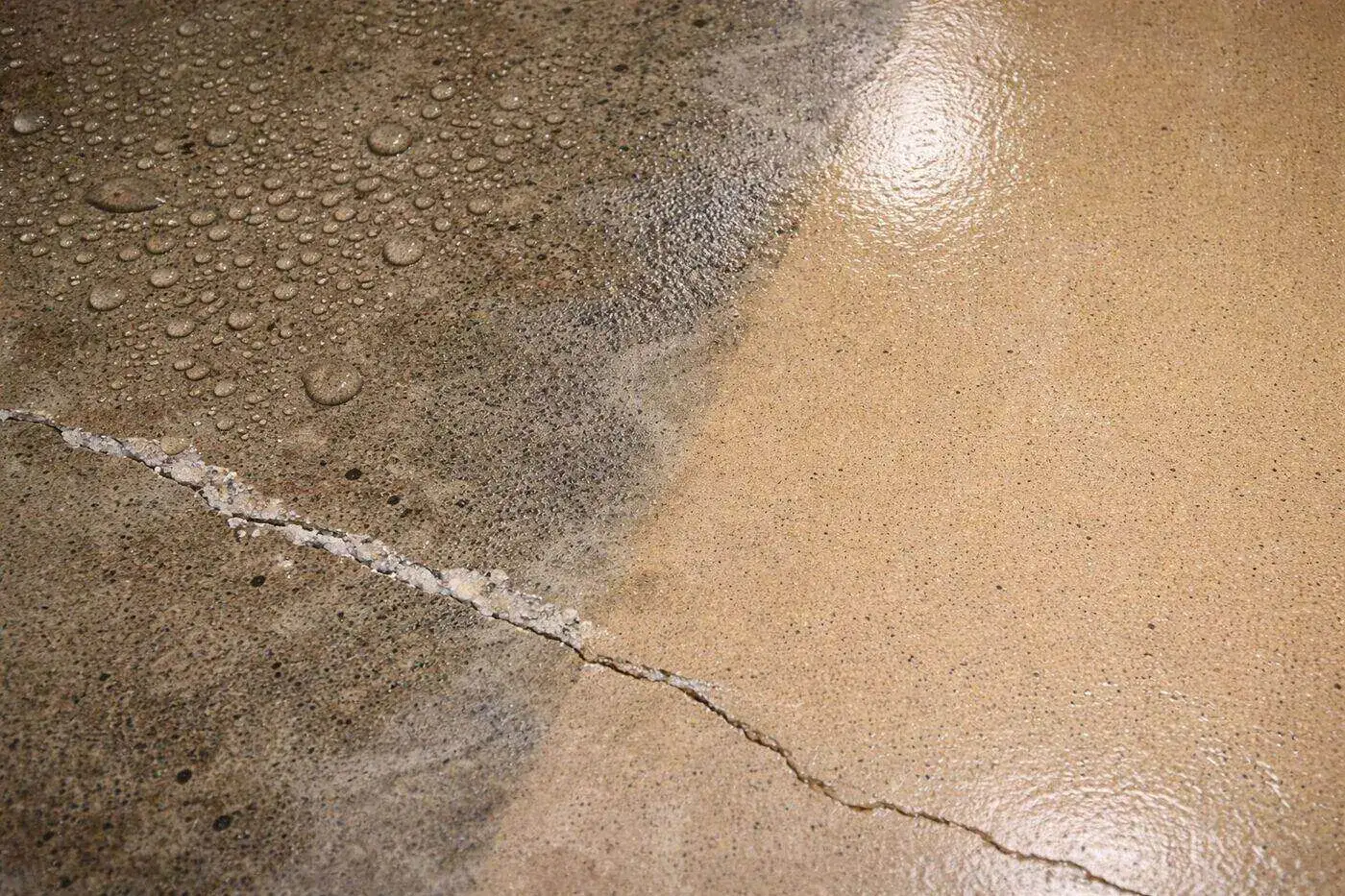
Why Epoxy Floors Fail in Duval County — and the Moisture Test That Prevents It
The high water table, MVT testing, and what to ask before you sign.
How Long Does an Epoxy Floor Last in Duval County?
Realistic lifespans and what shortens them in Northeast Florida.