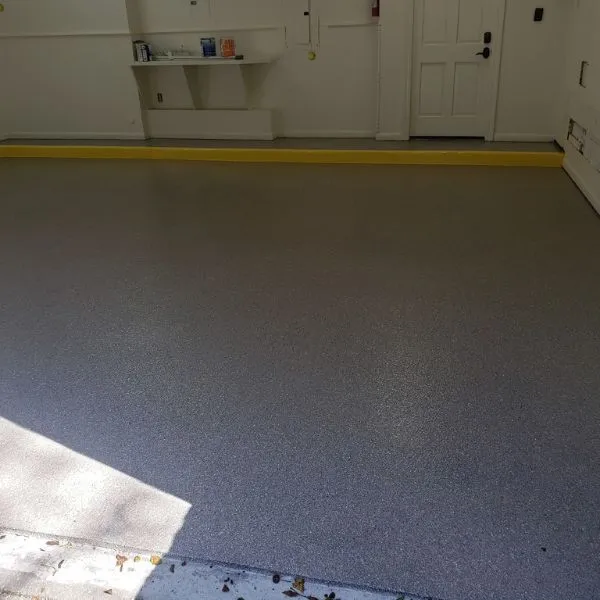
In Northeast Florida, the one thing that decides how long your epoxy floor keeps its gloss is how diligently you keep beach sand and salt grit swept off it. Dust-mop the floor often, damp-mop with a pH-neutral cleaner when it dulls, rinse off coastal salt, and never reach for vinegar, citrus, or an abrasive pad. That is most of the job.
An Ascent Epoxy floor is poured, broadcast with flake, and sealed under a polyaspartic wear coat so the finished surface has no grout lines, no open pores, and nowhere for a spill to soak in. That same seamless build is why upkeep is so light. What it is not immune to is the fine quartz sand that blows in off the Atlantic and rides in on shoes and tires across every Duval County garage near the water. Grit, not water and not mild cleaner, is the thing that wears a clear topcoat, and in this corner of the state there is simply more of it.
So this guide is ordered the way an actual Jacksonville floor gets used: the routine that keeps the gloss, the products that quietly ruin it, the salt-air and high-water-table realities specific to the First Coast, the stains worth knowing how to lift, and the point where a worn coat is a job for Blake's crew rather than your mop. The advice holds whether you park two cars over flake in Mandarin or show off a metallic pour in a Fleming Island game room. For a straight read on a tired floor, call (904) 441-5056 and we will come look at it for free.
The Simple Weekly Routine
Think of upkeep as two speeds: a fast, frequent grit pass, and a slower wash you only do when the floor asks for it. On the First Coast the grit pass carries most of the weight, because sand reaches the floor here far faster than dirt does in a dry inland garage.
The quick grit pass
A soft-bristle broom or a microfiber dust-mop is the most valuable tool you own for this floor. Run it across the surface to clear sand before anyone drives or walks the same line twice, because once a tire or a boot presses that quartz grit down it drags like fine sandpaper across the polyaspartic. A Riverside garage that sees one commuter car can get by with a weekly sweep; a Ponte Vedra Beach or Atlantic Beach garage that opens straight onto sandy driveways earns a 60-second pass every two or three days. The sweeping is doing more for your gloss than any product on the shelf.
The deeper wash
When a sweep no longer freshens it, damp-mop. Dilute a pH-neutral floor cleaner in warm water, run a flat microfiber mop over the surface in sections, and then go back with clean water so no cleaner film is left to dry into a haze. The floor is non-porous, so a damp mop is plenty; there is no need to flood it. Most Duval County homes land on a monthly wash, while a low-traffic interior pour can stretch past that. Spills get handled the moment they happen, blot the bulk, clean the spot, rinse, and the sealed surface lets almost nothing set. Note what is absent from this list: no wax, no sealer, no polish. Those belong to other floors, not a quality epoxy system.
What NOT to Use on an Epoxy Floor
Here is the part most homeowners get backwards: the floors we are called out to recoat early were rarely worn out by cars or foot traffic. They were dulled by a cleaner. A polyaspartic topcoat shrugs off impact, road salt, and brake fluid, yet a bottle of the wrong stuff under the kitchen sink can haze it in a season. Three categories cause nearly all of that damage, and they are worth naming individually rather than just memorizing a chart.
Acids are the worst offender, and they hide in "natural" products people assume are gentle. Vinegar, lemon and citrus degreasers, and a lot of tile and bathroom cleaners are all acidic, and each pass eats a little gloss until the surface goes flat and cloudy. Muriatic acid and concrete etchers belong on bare slab during prep, never on a finished coat.
Abrasives are the second. Steel wool, green scour pads, wire brushes, and gritty powders leave fine scratches that catch light and turn traffic lanes milky. When a mark needs agitation, a soft deck brush or a white non-abrasive pad does the work without the scarring.
Harsh solvents and film-leaving soaps round it out. Strong industrial degreasers, bleach, ammonia, and acetone can soften or discolor a coat with repeated contact, and any soap that dries to a residue just hazes the gloss and grabs more sand. The quick mental test: if the label brags about stripping, deep-etching, or dissolving anything, keep it off the floor.
| Keep Away From the Floor | Reach For Instead |
|---|---|
| Vinegar, citrus, and acidic tile cleaners | A pH-neutral floor cleaner in warm water |
| Steel wool, green pads, gritty powders | Soft deck brush or white non-abrasive pad |
| Bleach, ammonia, industrial degreasers (routine) | Diluted pH-neutral degreaser, then rinse |
| Acetone, paint thinner, muriatic acid | Spot-test only; rinse fast if ever used |
Northeast Florida-Specific Care
Most epoxy-care advice you find online was written for a dry, temperate garage somewhere far from the ocean. The First Coast is the opposite environment. Between the Atlantic, the St. Johns River winding through the middle of town, a water table that sits close to the surface, and a hurricane season that runs June through November, a Jacksonville floor faces conditions a dry inland garage never sees. Adjusting for four of them keeps your finish looking new years longer.
Atlantic Sand and Salt Grit
This is the one that matters most here. Quartz beach sand and dried sea salt ride in on shoes, paws, and tires from Jacksonville Beach, Atlantic Beach, Neptune Beach, and Fernandina year-round, and that fine grit is the single most abrasive thing your floor will ever meet, well ahead of the cars themselves. The defense is not a special cleaner; it is a walk-off mat at the door from the driveway and another at any entry from a deck, plus sweeping more often than an inland homeowner would think necessary. Catch the sand at the threshold and most of it never reaches the coating.
Humidity and a Sweating Slab
Northeast Florida runs humid most of the year, and on a muggy morning a cool concrete slab can pull condensation out of the air and bead it on the surface. On a properly sealed Ascent floor that water sits harmlessly on top, the coating is non-porous, but a wet floor is briefly slick and can dry tracked-in salt into a film if you let it stand. A box fan or an open bay door clears it fast. Worth separating clearly: this surface sweat is a cleaning matter, while moisture pushing up from below the slab is a prep-and-installation matter, covered in the next section and in our moisture guide.
Storm Season and Standing Water
From June into November, First Coast garages take wind-driven rain, debris, and grit through open or leaky bay doors, and low-lying neighborhoods near the river or the Intracoastal can see water push in. Epoxy is fully waterproof, so a soaking does not hurt the coating, but the silt and salt a flood leaves behind is gritty and should be rinsed and swept off promptly once it is safe. Squeegee out standing water, clear the debris, and your floor comes through a storm in far better shape than the bare concrete next door.
Lanai, Pool Deck, and Open-Bay Floors
Coated outdoor surfaces, a screened lanai in Nocatee, a pool deck in Mandarin, or a garage that stands open onto the street, take constant sun, chlorine, and salt air on top of everything else. Rinse them with a hose now and then to flush chlorine splash and salt before it builds at the edges, and sweep the grit. The relentless First Coast sun is the other stress, which is exactly why we spec a UV-stable polyaspartic topcoat for any exposed pour, and why keeping salt and chlorine rinsed off helps that coat hold its color and clarity.
Floor Looking Dull or Worn?
If routine cleaning is not bringing back the shine, the topcoat may be ready for a refresh. We will take a look and give you a real number, free.
Removing Common Stains
The non-porous surface is your ally with stains: almost nothing soaks in, so the marks you do get sit on top and lift with patience instead of muscle or harsh chemistry. Here are the four First Coast garages run into most, and how to clear each without touching an acid.
Hot-Tire Marks
In a Florida summer, asphalt-hot tires can soften a weak coating and grab at it, leaving cloudy or tacky patches right where the car parks, the classic "hot-tire pickup." A correctly poured flake-and-polyaspartic floor resists it well, but if you see it, work a pH-neutral or epoxy-safe degreaser into the spot, give it a few minutes to soften, agitate with a soft brush, and rinse. Repeat rather than reaching for a scour pad. Backing the car out to cool on the hottest afternoons, or parking on a mat, heads it off; marks that keep returning are usually a sign the topcoat is thin.
Oil and Grease
Motor oil, transmission fluid, and kitchen grease never penetrate a sealed floor the way they sink into bare concrete, so you are only cleaning the surface. Blot the bulk with a paper towel, work a diluted pH-neutral degreaser into what is left, let it dwell briefly, then wipe and rinse. An older, set-in film usually surrenders on a second pass. Skip the strong solvent degreasers that can cloud the coat.
Rust
Humidity is rust's friend here, so a steel jack stand, a tool, or a metal shelf foot left on a damp First Coast floor will leave an orange mark sitting on the sealed surface. Wet it, work it with a soft nylon brush and a pH-neutral cleaner, and rinse. Do not grab a classic rust remover, almost all are acid-based and will etch the topcoat. Felt pads or a barrier under any metal foot stops the marks from forming in the first place.
Paint and Dried Spills
Latex paint and most household chemicals wipe right off while wet. Once paint, caulk, or a similar spill has dried, lift the edge with a plastic putty knife or an old credit card held flat, never a metal blade or razor that can gouge the coat, and the bulk pops off the non-porous surface. Clean the residue with a mild cleaner and rinse. If something has fully cured into a hard film and will not budge, stop before you scratch the floor and let us handle it.
Protecting the Finish (and When to Recoat)
Cleaning keeps the floor looking good; a short list of protective habits decides whether it needs a recoat in a handful of years or many more. The clear topcoat is a sacrificial wear layer by design, so the gentler your habits, the longer it carries the load before anyone has to touch it.
- Stop sand at the door. On the First Coast this is the highest-leverage habit there is. A walk-off mat where the garage meets the driveway and another at any door from a deck or lanai keeps the bulk of abrasive Atlantic grit off the coating entirely.
- Lift heavy gear, do not drag it. A toolbox, motorcycle stand, or appliance dragged across the floor grinds grit into the coat and can gouge it. Use a dolly with soft wheels or get a second set of hands.
- Pad the point loads. Felt pads or rubber feet under shelving, cabinets, and a workbench stop both scratches and the rust marks our humidity loves to leave under bare metal feet.
- Mind heat and sharp edges. Set a board under a running engine, a hot fire pit, or anything with a sharp metal edge. The coat is tough, but sustained direct heat or a dropped blade can still mark it.
- Rinse the coastal floors. If you are near the beach or the river, a periodic hose-down flushes salt before it concentrates at edges and open bays.
Even cared for well, the clear wear layer thins gradually over years of traffic and First Coast sun. When a floor goes permanently dull across the parking lanes no matter how you clean it, that is the wear coat reporting in, not the floor failing. A pro can scuff the surface and lay a fresh wear coat over a sound system, bringing back the original gloss for a fraction of a full rebuild. How soon that comes around depends on traffic and exposure, walked through in our guide to how long epoxy floors last in Duval County.
When to Call a Pro
The mop and the soft brush handle day-to-day life. A few specific symptoms, though, are your cue to stop scrubbing and bring in a professional, both so you do not over-work a mark that will not move and so you do not let a real problem quietly spread.
- A stain that survives two proper passes. If a mark shrugs off pH-neutral cleaning done correctly, a pro has floor-safe products and methods to clear it without risking the finish, and can say whether a recoat is the smarter fix anyway.
- Gloss that is gone for good in the traffic lanes. When the shine will not return no matter how you clean, the wear layer is spent. That is a scuff-and-recoat job, not more elbow grease.
- Peeling, bubbling, or blistering, this is the one that matters most. A coat that lifts or flakes is almost never a cleaning problem. On the First Coast it usually means moisture is pushing up through a slab that sits on a shallow water table, and it will not heal itself. Our guide on why epoxy floors fail in Duval County walks through the ASTM moisture test that catches it before a single gallon is poured.
For any of those, an in-person look beats guessing. As you weigh it, our breakdown of epoxy flooring cost in Duval County explains what goes into the price of a recoat or a fresh system here, from a two-car flake garage up through metallic and commercial work, so you know what to expect before you call.
Frequently Asked Questions
How do you clean an epoxy floor in Jacksonville?
Start by dust-mopping or soft-brooming to clear the Atlantic sand and grit that is the main thing wearing a First Coast floor, then damp-mop with a pH-neutral cleaner in warm water and rinse so no film is left. Wipe spills as they happen. Keep acids, vinegar, citrus degreasers, and abrasive pads off it. That routine, plus a walk-off mat at the door, is all most Duval County floors ever need.
Can I use vinegar on an epoxy floor?
No. Vinegar is acidic, and so are many citrus and bathroom cleaners people assume are gentle. Each use slowly etches the clear topcoat and pulls the gloss down to a hazy flat. Reach for a pH-neutral floor cleaner instead and rinse with clean water so nothing is left to dry into a film.
How do I remove hot-tire marks from epoxy?
Florida summer heat makes hot-tire pickup more likely where a car sits. Work a pH-neutral or epoxy-safe degreaser into the spot, let it dwell a few minutes, agitate with a soft brush or pad, and rinse, repeating rather than reaching for steel wool or an acidic stripper. A correctly poured flake floor with a polyaspartic topcoat resists pickup well, so marks that keep returning usually mean the topcoat is thin.
What's the best cleaner for an epoxy garage floor?
A pH-neutral floor cleaner diluted in warm water is the best everyday choice. It lifts sand, dirt, and light grease without etching the finish, and a diluted pH-neutral degreaser handles stubborn grease. Avoid vinegar, citrus cleaners, gritty powders, and anything that leaves a film, and always finish with a clean-water rinse.
How often should I clean an epoxy floor in Northeast Florida?
Sweep or dust-mop more often than an inland homeowner would, because coastal sand and salt grit reach a Duval County floor fast, a garage near the beach earns a quick pass every two or three days. Damp-mop with a pH-neutral cleaner about monthly or whenever it dulls, spot-clean spills right away, and hose off pool-deck and open-bay floors now and then to clear salt and chlorine.
How do I keep my epoxy floor from getting dull?
Keep abrasive sand off it with frequent sweeping and walk-off mats at every entry, use only pH-neutral cleaners, rinse away any soap film, and never drag metal tools or jack stands across the surface. Pad furniture and shelf feet, and park on a mat in the hottest months. When the wear topcoat finally thins after years of First Coast sun and traffic, a fresh recoat restores the original shine.
Get Your Free Duval County Epoxy Quote
Sweep the sand, mop with the right cleaner, and keep metal off the coating, and a First Coast epoxy floor holds its gloss for a long time. But once a floor is past what cleaning can fix, dull through the parking lanes, stained deep, or peeling at the edges where slab moisture has crept in, the honest next move is a professional look. Blake's crew will tell you straight whether yours needs a simple recoat or a fresh system built for Northeast Florida salt air and a shallow water table, and put a clear number on it either way.
Ready to refresh or rebuild your floor? Call (904) 441-5056 or request a free quote online. We work across Duval County and the wider First Coast, including Ponte Vedra Beach, Nocatee, Atlantic Beach, Neptune Beach, Mandarin, San Marco, Riverside, Orange Park, Fleming Island, Jacksonville Beach, Fernandina Beach, and St. Augustine.
Related Articles
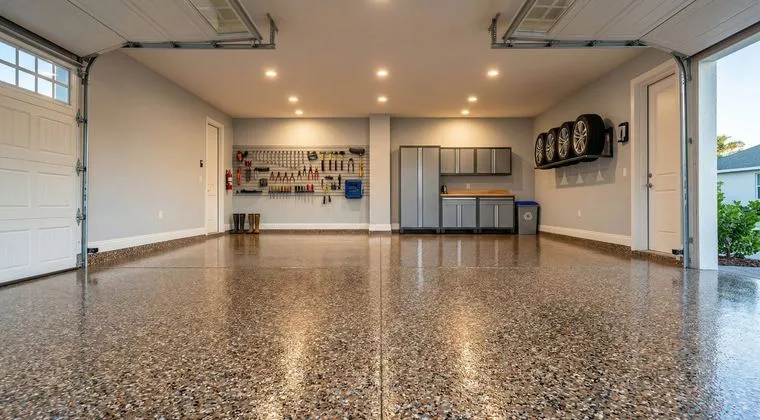
How Long Does an Epoxy Floor Last in Duval County?
Realistic lifespans and what shortens them in Northeast Florida.
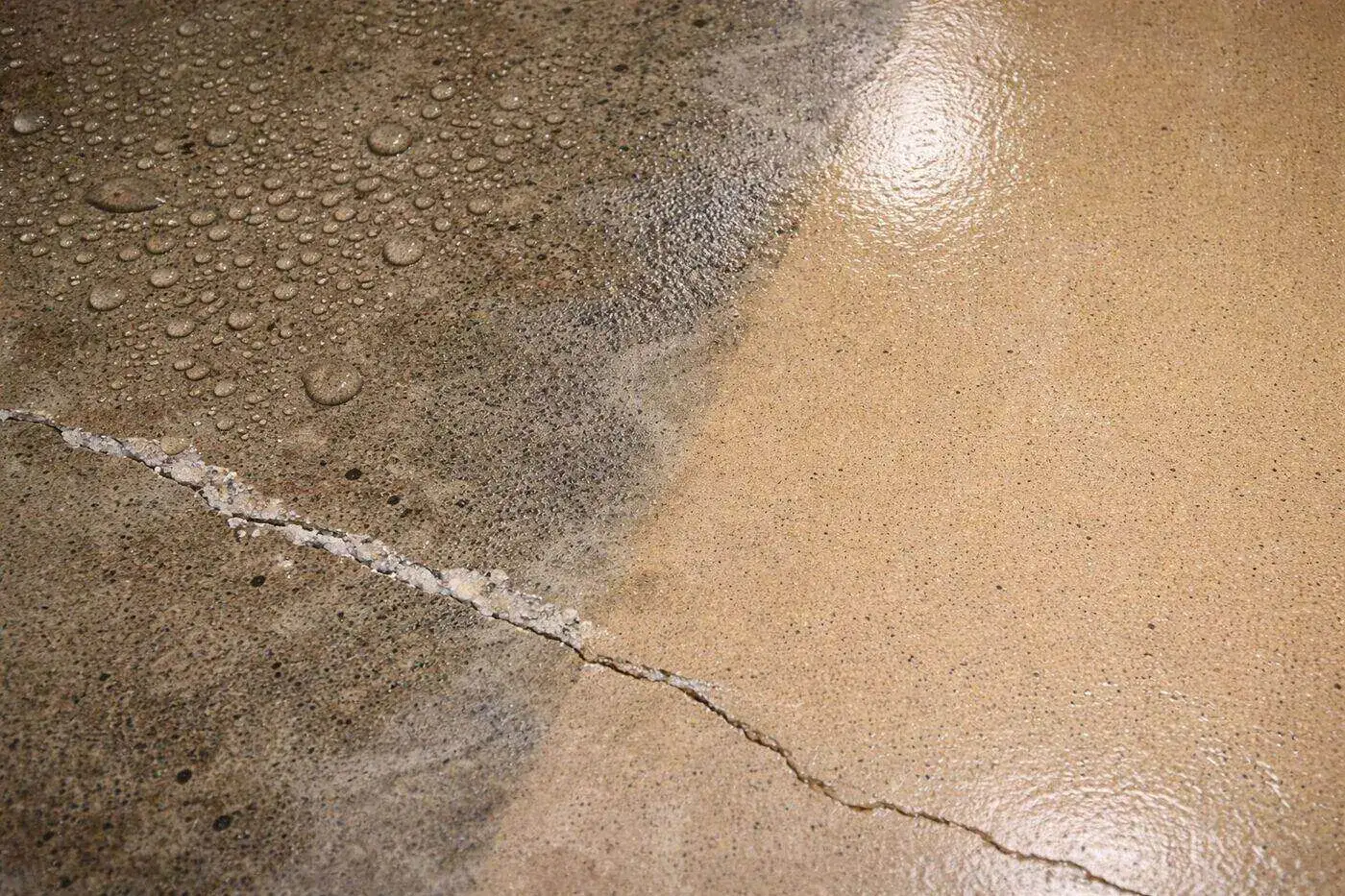
Why Epoxy Floors Fail in Duval County — and the Moisture Test That Prevents It
The high water table, MVT testing, and what to ask before you sign.

How Much Does Epoxy Flooring Cost in Duval County? (2026 Guide)
What sets the price of a Duval County floor, and what a real quote should include.